
Training Science · Generalization
Dog Aggression Toward Other Dogs: Training for a More Reliable Walk
Robert Santana, PhD | Phoenix, AZ | September 2026 | ~7 min read
A dog that becomes aggressive around other dogs can make an ordinary walk, doorway, or shared room feel unpredictable. Your dog may bark and lunge as another dog approaches. In a different setting, the first warning may be a frozen stare, a snap near a food bowl, or a fight with a dog they already know. For dog aggression toward other dogs, training begins by stopping the approach and making enough room for your dog to move with you again. If your dog can take food and turn away at 40 feet but loses control at 20, begin at 40.
That extra room buys you time. It leaves the dog able to look back, take food, and walk away instead of throwing its full weight into the leash.
If your dog has injured another dog, redirected toward a person, or cannot be moved away safely, skip close practice. An in-person assessment comes first.
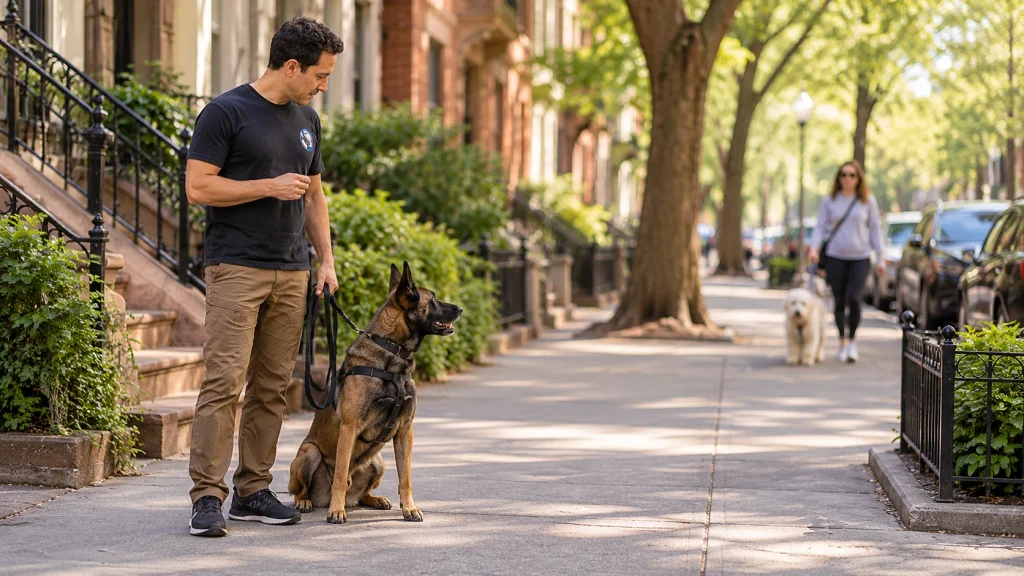
Dog aggression toward other dogs training during a controlled neighborhood walk with another dog at a safe distanceWhen another dog appears
Before Training Dog Aggression Toward Other Dogs, Find the Trigger
The loudest part of the incident often arrives late. Watch the few seconds before it. Your dog may notice the other dog and keep walking, then close the mouth and go still as the gap narrows. Another dog leans forward immediately or tries to back away. A refusal of food is also worth noting. After the other dog leaves, see whether yours shakes off and continues down the block or keeps staring at the empty corner.
Those differences change the next session. A dog that recovers in a few seconds may be ready to repeat the same setup at the same distance. A dog that stays wound up for the rest of the walk needs an easier route and more space next time.
Compare the places where the behavior happens. One dog may cope in a wide parking lot and unravel in a narrow apartment hallway. Another is comfortable until a dog turns and walks directly toward them. At home, fights may cluster around a bowl, a chew, or the doorway when everyone rushes outside. The event has a pattern even when it initially feels random.
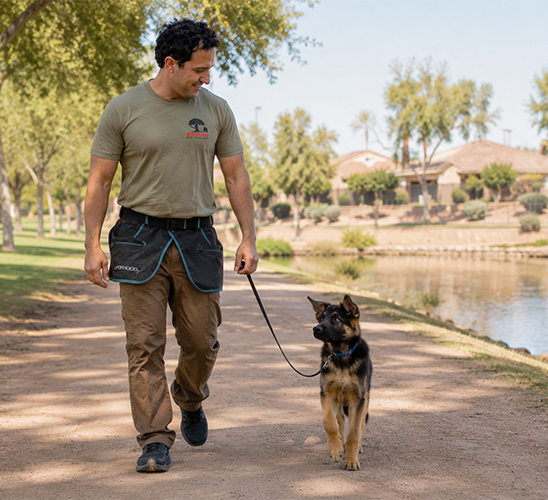
The behavior looks solid here. The real question is whether it survives a change of scene. Photo: Ironwood Dog Training, Phoenix.
Dog aggression toward other dogs on leash deserves a closer look at space and movement. The leash limits how far a dog can move away or curve around an approaching dog. It can also block a dog that is straining to get closer. Owners often ask why their dog is aggressive on leash but not off leash. That comparison is useful history, but it does not make an off-leash meeting with an unfamiliar dog a safe test. Record where the behavior actually occurs and work there under controlled conditions.
Age matters when the change is sudden. If an adult dog that previously handled other dogs well becomes irritable, stiff, or quick to snap, schedule a veterinary exam. Pain and other medical problems can contribute to behavior changes. The Merck Veterinary Manual recommends ruling out medical contributors as part of a behavior assessment.
A young dog with little experience around unfamiliar dogs may simply have fewer skills to draw on. Socialization history is worth discussing, but the next step still depends on what the dog can handle now. Five minutes of observation at a workable distance tells you more than a guess about what should have happened during puppyhood.
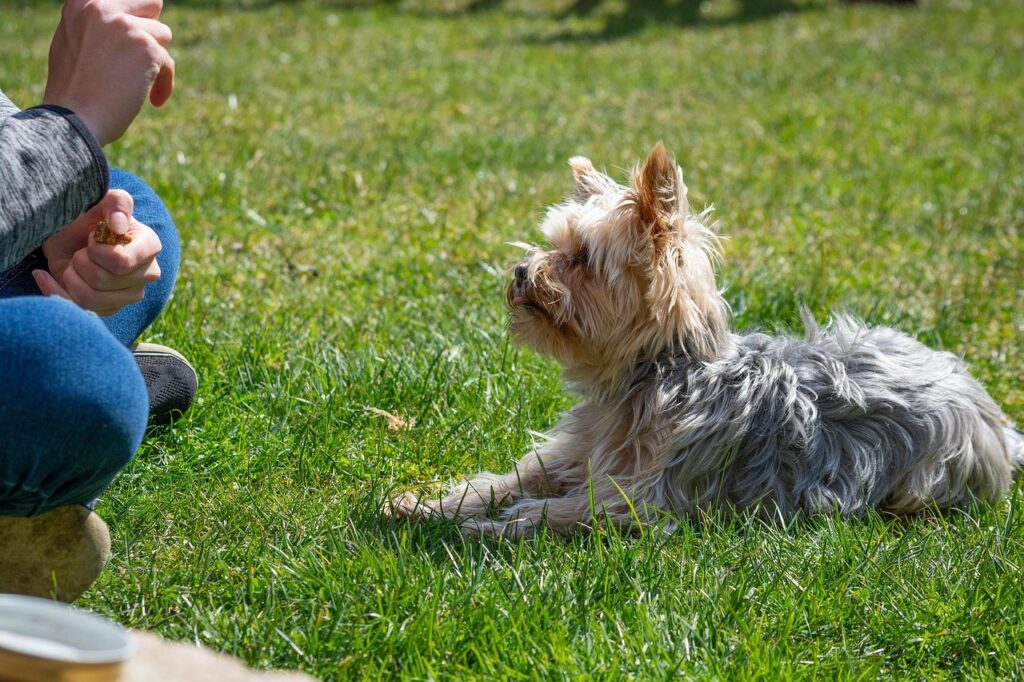
When another dog appears on your walk
When training a dog that is aggressive toward other dogs, the best time to act is before the barking and lunging start. Give yourself room while your dog can still follow.
Cross the street or turn onto another route early.
Use a practiced U-turn and keep moving.
If there is nowhere to go, place your dog behind you.
Scatter a few treats on the ground when you need a moment to leave.
Tell the other handler that your dog needs space.
These are exit skills. Practice them on quiet walks first, without another dog nearby. A U-turn should feel easy before you need it beside a busy sidewalk. Say the cue, turn, and reward your dog for coming with you. A few short repetitions are enough.
On a real walk, leave when the first small changes appear. Your dog may stare half a second longer than usual. The leash starts to tighten. A treat that was swallowed immediately now sits in the mouth. Cross then. Waiting for barking gives you fewer choices and a much stronger dog to move.
Parked cars, hedges, and corners can briefly block the view while the other dog passes. Use them. If you live in a building with a narrow lobby or shared elevator, pause before entering and check the space ahead. Ten quiet seconds in the hallway are easier to manage than two dogs meeting as the elevator doors open.
Keep a secure hold on the leash without wrapping it around your hand or waist. When there is room, move in an arc or turn away instead of planting your feet and pulling straight back. If your dog is already lunging, protect the distance and leave. Repeating “sit” while the dog is staring through you rarely improves that moment.
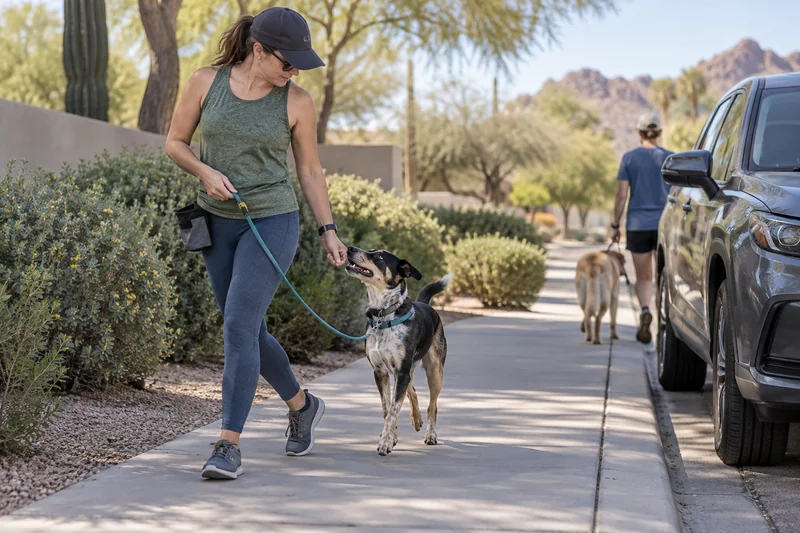
The rest of the walk may need to be simple. Give your dog time to sniff or head home if they remain too agitated to eat or respond. One surprise encounter can make the next block much harder. Ironwood’s guide to leash training around real Phoenix distractions explains why a skill that works in a quiet place can disappear when the setting changes.
Management on a walk is part of training because it stops the same blowup from being rehearsed every day. It also protects other dogs while you build a response your dog can actually use.
Dog Aggression Toward Other Dogs: Training at Ironwood
At Ironwood Dog Training, we first watch what the dog can still do when another dog enters the picture. Taking food is one clue. We also look for a voluntary head turn and whether the dog can move away after one cue. Recovery once the other dog is gone tells us how difficult the encounter was.
Suppose the dog can do all of that with another dog standing 40 feet away. At 20 feet, the dog stops eating and locks into a stare. Forty feet is the starting distance. Walking closer to prove the dog can handle it would only give us another reaction to recover from.
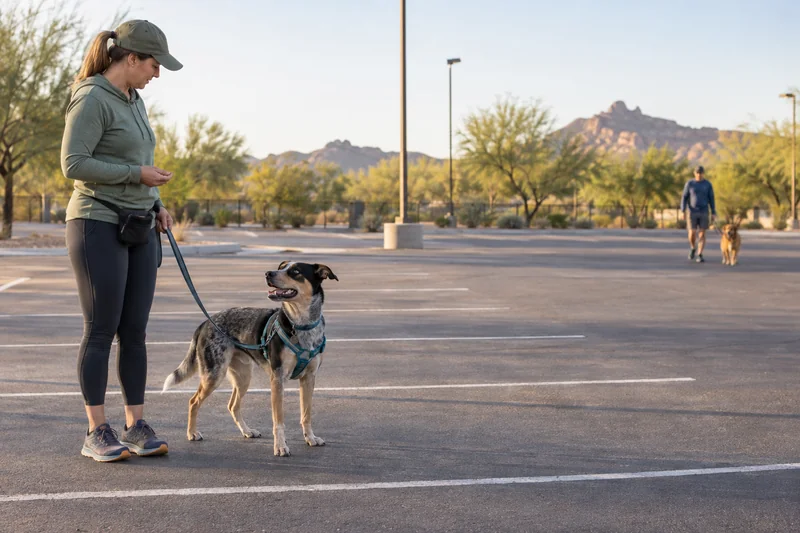
The first repetition may be small: the dog notices the other dog, takes a piece of food, and turns away with the handler. Do that a few times and stop while it is still clean. Three useful repetitions tell us more than ten attempts when the last five end in barking and lunging.
Rewards need to arrive while the dog is still able to notice them. Food is convenient, but the reward can also be moving farther away. For a dog that wants space, following the handler around a parked car may be more valuable than standing still for another treat. The trainer watches the result and adjusts.
Difficulty goes up one piece at a time. A dog may handle another dog standing across a parking lot, then struggle as soon as that dog starts walking. The next practice setup can add slow movement while keeping the original distance. A narrow sidewalk comes later.
Basic cues help only when the dog can still use them. A sit learned in the kitchen does not automatically survive the sight of a moving dog across the street. Ironwood’s article on why obedience changes outside the house goes deeper into that gap. For dogs that are safe for a standard program, basic obedience training can give the owner a smoother turn and a dependable way to regain attention. An aggression history still needs to be disclosed before choosing a program.
The work eventually returns to the owner’s normal route. The starting setup may be quiet and spacious, but the useful test is whether the dog can make the same turn when another dog moves, a gate opens, or the handler changes direction. Ironwood looks at the dog’s response and recovery in each new version before raising the difficulty again.
If you are trying to figure out how to stop dog aggression toward other dogs, do not measure progress only by how close the dogs can stand. A shorter stare, a faster turn, or an ordinary loose walk after the other dog passes may be the better result that day.
When the problem carries more risk
Fights between dogs in the same home need their own safety plan. Feed separately if food has been involved. Pick up chews or toys that have triggered conflict. Gates, closed doors, and separate resting areas prevent another fight while the situation is assessed. Putting the dogs back together to see whether they have “gotten over it” adds risk without giving you a useful training setup.
A bite changes the plan as well. After a puncture, repeated fights, or redirected aggression toward a person, dog-on-dog aggression training should begin with an in-person review of what happened. Bring an honest account of the incident: what the dogs were doing beforehand, whether anyone was injured, and how the dogs were separated. A normal video recorded from a safe distance can help. Do not stage another close encounter to get footage.
Some dogs need a properly fitted basket muzzle as one layer of protection. The dog should learn to put their nose into it comfortably before it is used in a difficult setting. A muzzle reduces bite risk; it does not make crowded greetings or uncontrolled play appropriate.
Sudden behavior changes, suspected pain, or anxiety that prevents the dog from eating and recovering call for veterinary input. A trainer experienced with aggression cases can handle the training setup, while a veterinarian addresses medical questions. Severe or complex cases may also need a veterinary behaviorist.
Frequently Asked Questions
Should I tighten the leash when my dog lunges?
Use enough leash control to prevent contact, then create an exit. Constant backward pressure often turns the moment into a pulling contest. If the space allows it, shorten the leash for safety, turn your body, and move in an arc toward more room. Avoid reaching near the collar of a highly aroused dog because a redirected bite can land on the handler.
Does my dog need to greet other dogs during training?
No. Calm neutrality is a useful goal. A family dog can have a good life without greeting unfamiliar dogs on walks. Later, carefully selected introductions may be possible for some dogs, but social contact is not the test of whether the training worked.
Can dog aggression be treated without punishment?
Yes. Reward-based behavior work pairs safe exposure with outcomes the dog values and reinforces responses such as turning away or following the handler. Safety rules still apply. The dog stays leashed where required, access to other dogs is controlled, and household dogs may be separated around known conflict points. The American Veterinary Society of Animal Behavior recommends reward-based methods and advises against aversive methods for behavior modification.
Can training still help after my dog has bitten another dog?
Yes, though the goal may change. The focus might be calm transport, dependable separation at home, and preventing another injury. Close greetings or dog-park play may remain off the table. Bite severity, predictability, and the handler’s ability to prevent contact all shape the plan.
A calmer place to begin
The next useful step is usually farther away than owners expect. Leave before the leash turns into a fight. Start where your dog can still respond, then use recovery to decide when to change the exercise.
If every walk is planned around the next blowup, or your dog has already made contact with another dog, talk with Ironwood about your dog. For dog aggression toward other dogs, training at Ironwood begins with the behavior you are seeing, the setting where it happens, and a distance everyone can manage safely.
Ready for a Walk That Is Not a Fight?
If you have done the loose leash work and your dog still comes apart on the street, the missing piece is probably arousal, not obedience. Tell us about your dog and we will give you an honest read on what would actually help.