
If your dog hits the end of the leash every single time you step outside, you are not dealing with a stubborn dog or a dominant dog. You are dealing with a reflex. And until you understand that, nothing you try is going to stick.
Most people come to us having already tried a dozen different things. A prong collar. A no-pull harness. Stopping dead in their tracks. Turning around and walking the other way. Sometimes those things seem to help for a day or two, then the dog is right back to dragging them down the street. There is a reason for that, and it has everything to do with how dogs are wired neurologically.
Let me explain what is actually going on, because once you see it, the whole picture changes.
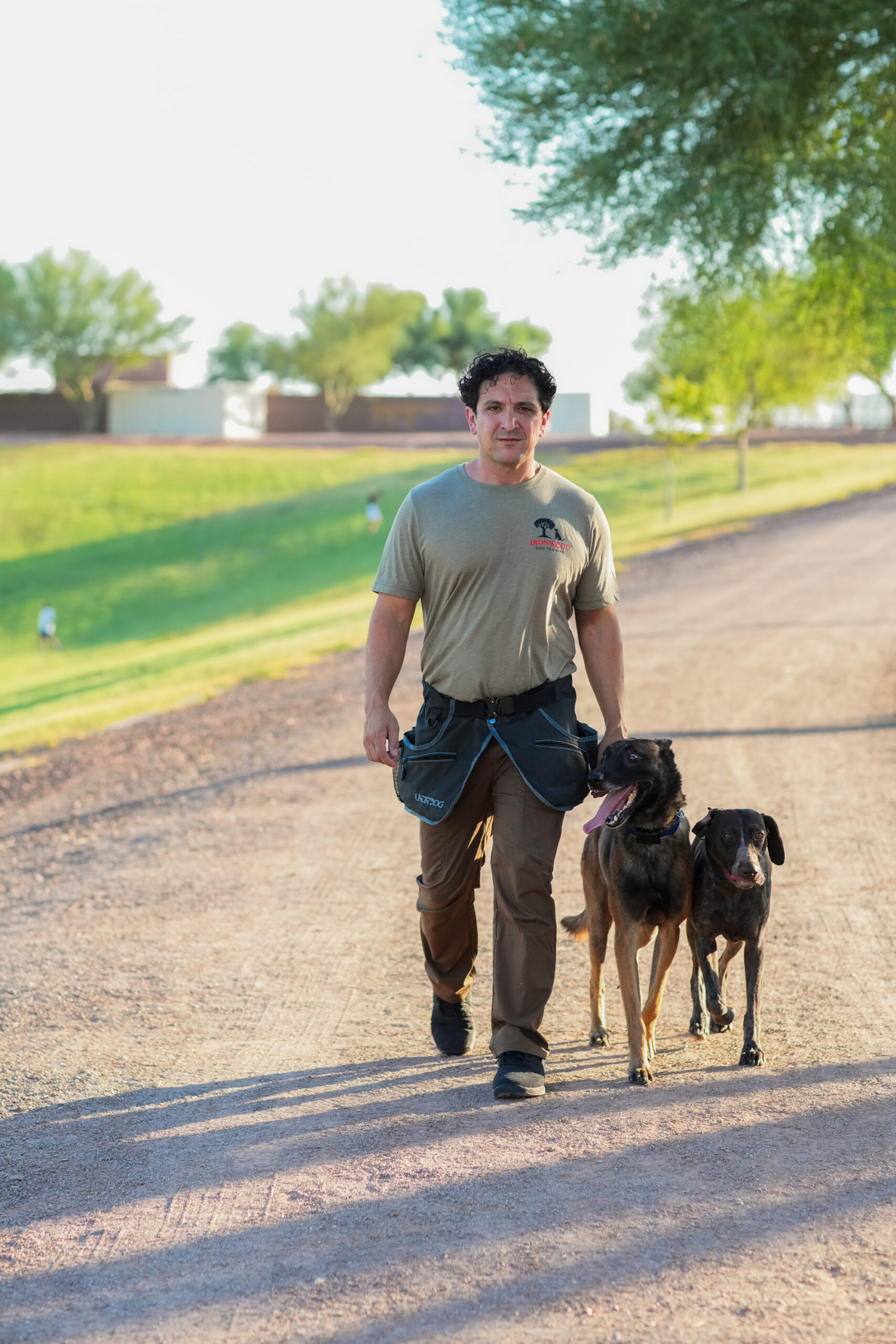
The Oppositional Reflex: Your Dog Is Not Defying You
Dogs have something called an oppositional reflex. When they feel pressure against their body, they instinctively push back into it. This is not a choice. It is not stubbornness. It is a hardwired nervous system response that goes back long before anyone ever put a leash on a dog.
So when your dog feels the leash tighten, the reflex fires and they lean forward harder. You pull back, they pull forward. Every single time. The harder you fight it, the stronger that pattern gets. You are essentially doing strength training with your dog on every walk, and the dog is winning.
This reflex is well documented in behavioral science and is the same mechanism you see in sled dogs, tracking dogs, and search and rescue dogs. Pressure on the chest or neck triggers forward locomotion. When traditional corrections are applied repeatedly, the dog does not learn to stop pulling. The dog learns to tolerate and push through discomfort, which is the exact opposite of what you want.
Why Standard Corrections Fail
Here is the honest truth about corrections on the leash: they can interrupt behavior in the moment, but they do not teach the dog what to do instead. And when the behavior being punished is a reflex, you are fighting biology.
A dog who gets a leash correction for pulling will often hesitate briefly, then go right back to pulling. Not because they are testing you. Not because they are trying to be the boss. They just do not have any information yet about what the correct behavior looks like, and the pressure from the leash keeps triggering the same reflex over and over.
This is why we see so many dogs in Phoenix who have been through other training programs and are still pulling on the leash. The previous training targeted the symptom. We need to go deeper than that.
You do not have a pulling problem. You have a reinforcement history problem. The walk itself has been the reward for pulling, thousands of times over. That history does not disappear overnight, but it absolutely can be rebuilt.
What Actually Works: Building the Behavior with Operant Conditioning
Loose leash walking is a trained behavior. It has to be built from the ground up, the same way you would teach a dog to sit or retrieve. The dog needs to understand what earns reward, and that picture needs to be crystal clear before you ever take it out into a distracting environment.
At Ironwood, we use operant conditioning to shape the specific position and movement we want. That means the dog is making choices, getting feedback, and learning through consequence. When the dog figures out that staying near you with a loose leash produces good things, the behavior becomes reliable because the dog is choosing it, not complying under pressure.
This is the foundation of our Basic Obedience program. Leash manners are built systematically, not bolted on as an afterthought.
Where most people go wrong in training
- Starting in environments that are too distracting before the dog understands the behavior at home
- Rewarding inconsistently, so the dog never builds a clear picture of what earns the reinforcer
- Using tools as a crutch instead of building understanding in the dog
- Moving too fast through the shaping process and skipping foundational steps
- Expecting the behavior to hold under distraction before it has been properly proofed
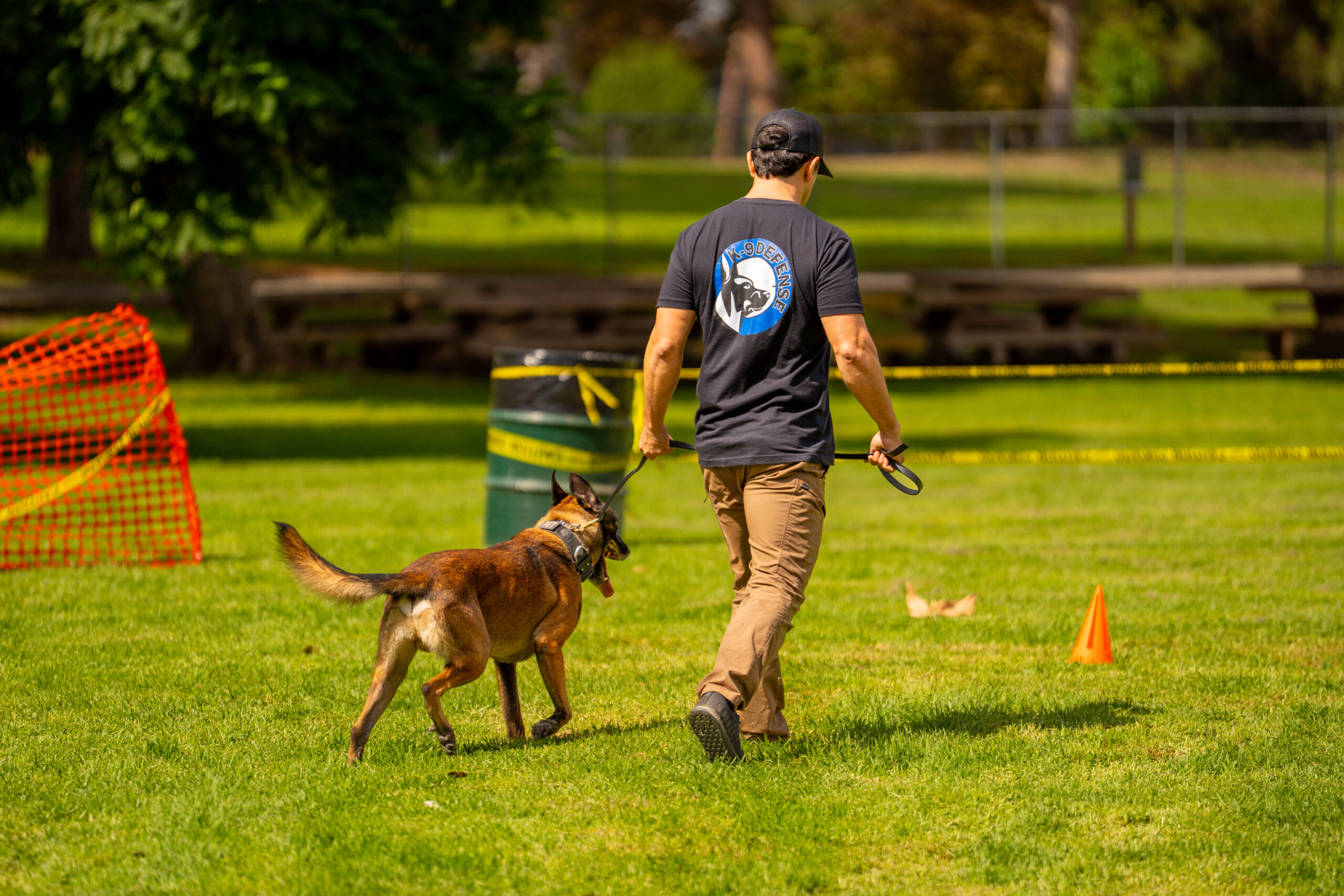
The Environment Is Part of the Equation
One thing we talk about a lot with our clients here in Phoenix is that the environment is always competing with your training. Hot concrete, other dogs, wildlife, traffic, smells baked into the sidewalk from the night before. The world outside is a far more exciting place than your living room, and a dog who walks perfectly at home will fall apart on a trail in Scottsdale if the training was never taken there.
Systematic exposure is part of the process. You build the behavior in low distraction, proof it in gradually more challenging settings, and reinforce heavily every time the dog makes the right choice in a hard environment. There are no shortcuts in that process, but it works.
The Role of Reinforcement: You Need the Right Currency
Reward-based training only works when you are using something the dog actually cares about. Some dogs will work for a piece of kibble in the backyard and need roasted chicken the moment you step onto a busy street. Some dogs are more toy-motivated than food-motivated, and the drive to chase and carry something can be a powerful training tool when you know how to use it.
Part of what we do is help owners figure out what motivates their specific dog and how to use that as a training tool. A dog who is not responding to your rewards is not a bad dog. More often than not, the reward just does not match the level of distraction in the environment.
How Long Does It Take to Train a Dog to Walk on a Loose Leash?
This is one of the most common questions we hear, and the honest answer is: it depends on the dog's history, age, and how consistently the training is applied. A young dog with a relatively short pulling history can show real improvement in two to four weeks of consistent daily practice. A dog who has been pulling hard for years is going to take longer, because that pattern is deeply ingrained.
What we tell our clients is this: you will see changes faster than you expect once the dog understands what you are asking. The first few sessions are about building the picture. After that, the rate of progress often surprises people.
Breed matters too. A high-drive working breed like a Malinois or a German Shepherd requires more precision in the shaping process than a lower-drive dog. We work with all breeds here in Phoenix, from family Labs to sport dogs, and the same foundational principles apply across the board.
If anything, the behavior gets more ingrained with time because the walk has been reinforcing it for years. The good news is that behavior built on reinforcement can also be changed with reinforcement. You just need a clear plan and someone who understands the science behind it.
What Loose Leash Walking Actually Looks Like When Done Right
A well-trained dog walking on a loose leash is not rigidly heeling at your left knee. That is competition obedience. What most owners need is a dog who moves with them, stays in a general position, and does not drag them around. The leash hangs in a soft J shape. The dog checks in with you periodically. The walk is enjoyable for both of you.
Getting there takes real training. It takes understanding what is happening inside the dog, building the behavior systematically, and putting in the repetitions in the right environments. But it is achievable, with any dog, at any age.
If you want to see how we structure our approach, take a look at the Basic Obedience program, or read more about how we train on our blog.
Frequently Asked Questions
Most dogs pull because the walk has been rewarding pulling for a long time. The forward movement, the smells, the stimulation of being outside, all of that has been reinforcing the behavior every single time the dog pulls. Add the oppositional reflex on top of that and you have a pattern that feels almost impossible to break without understanding what is driving it.
The most effective method is operant conditioning. You shape the dog's position and movement with a high-value reward, start in a low-distraction environment, and gradually proof the behavior in more challenging settings. The key is clarity: the dog needs to know exactly what earns the reward before you ask them to perform in a distracting environment.
Start by rewarding the dog for being in position next to you, even before you move. Treat frequently for staying close with a loose leash. The moment the leash tightens, stop moving. Reward when the dog returns to position and the leash goes slack. Build duration and distance slowly, and only add distractions once the behavior is solid in a controlled environment.
Yes. A longer pulling history means the behavior is more ingrained, but it does not mean it cannot be changed. It means the training process needs to be done carefully and consistently. We work with dogs of all ages and histories at our Phoenix facility and build a plan based on what your specific dog needs.